Original: $4.77
-65%$4.77
$1.67The Story
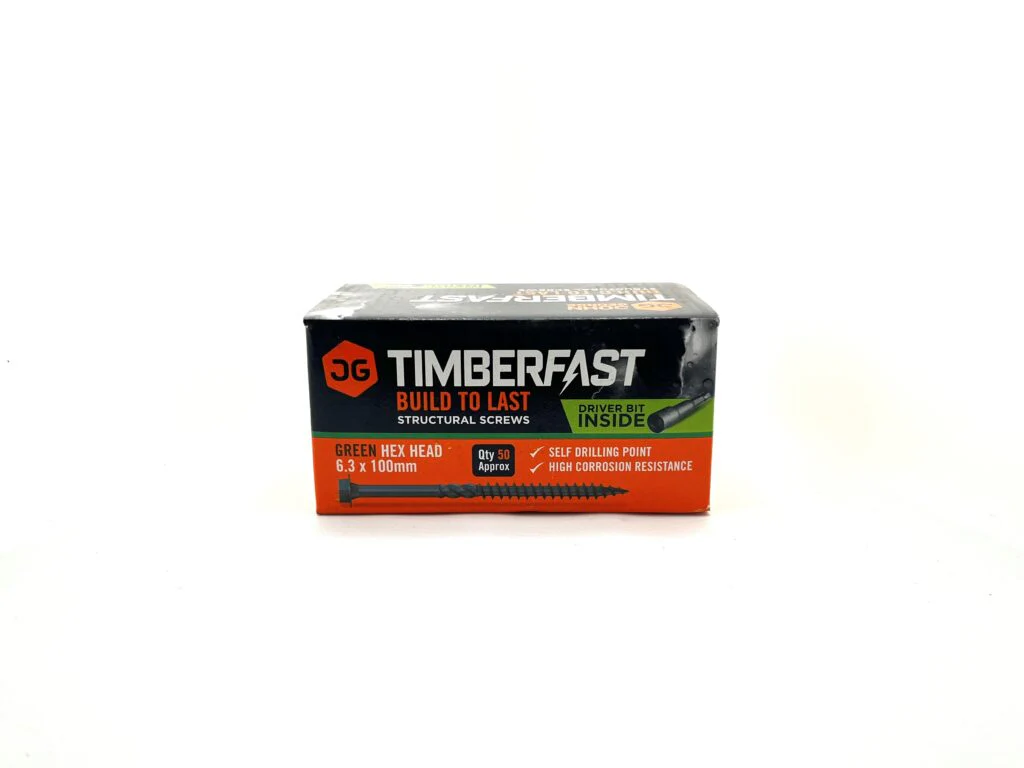
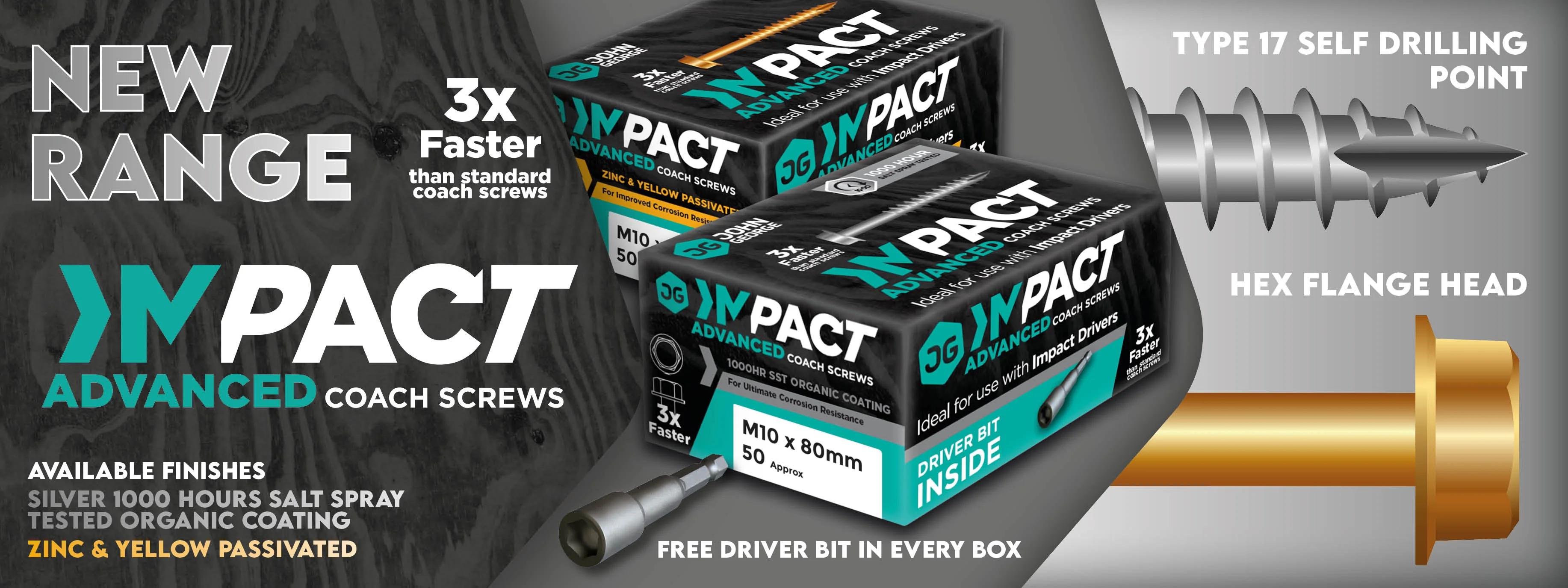
Impact Advanced Coach Screws are heavy-duty hex-drive fixings engineered for use with impact drivers, giving fast, secure fixing into timber structural applications. Available in M6 diameters from 25mm to 100mm, they deliver strong pull-out resistance without the need for a spanner or pre-drilling in many situations.
Specifications
| Property | Detail |
|---|---|
| Material | Hardened steel |
| Drive Type | Hex (impact driver compatible) |
| Nominal Size | M6 |
| Available Lengths | 25mm, 40mm, 50mm, 100mm |
| Pack Size | 100 pieces |
| Thread Profile | Optimised coarse thread for timber pull-out resistance |
What they are used for
- Decking frame construction, fixing joists to deck bearers and posts
- Fencing and landscaping work, including post-to-rail connections and retaining structures
- Heavy-duty structural joinery such as stud walls, roof timbers, and engineered timber connections
- Garden buildings, pergolas, and general outdoor timber construction
Fitting and handling
For best results, use a calibrated impact driver set to a controlled torque to avoid over-driving the head into the timber surface. In hardwoods or dense treated timbers, a pilot hole is recommended to prevent splitting, particularly near board ends. Store fixings in a dry environment to prevent any surface oxidation before use.
FAQ
Do impact coach screws need pre-drilling before fitting?
In softer construction timbers such as C16 or C24 graded softwood, pre-drilling is often not required. However, for hardwood, dense treated timber, or fixings close to the end grain, a pilot hole the same diameter as the shank will reduce splitting risk and give a cleaner finish.
What is the difference between a coach screw and a coach bolt?
A coach screw has a threaded shank and is driven directly into timber using a hex drive or spanner, whereas a coach bolt passes through the material and is secured with a nut and washer on the reverse. Coach screws are faster to fit where through-bolting is not practical or access is limited to one side.
Which length coach screw should I use for decking frames?
As a general rule, the screw should penetrate the receiving timber by at least half its thickness. For a standard 47mm joist fixing into a 75mm or 100mm bearer, the M6 x 100mm option provides a secure bite. For lighter rail-to-post connections, the M6 x 50mm is a practical choice.
These fixings work particularly well alongside the structural and landscaping timber stocked at Nottage Timber Merchants. Browse our decking timber range for treated joists, bearers, and deck boards, available for collection from our Bridgend yard or with next-day delivery across the South Wales area.
Description
Impact Advanced Coach Screws are heavy-duty hex-drive fixings engineered for use with impact drivers, giving fast, secure fixing into timber structural applications. Available in M6 diameters from 25mm to 100mm, they deliver strong pull-out resistance without the need for a spanner or pre-drilling in many situations.
Specifications
| Property | Detail |
|---|---|
| Material | Hardened steel |
| Drive Type | Hex (impact driver compatible) |
| Nominal Size | M6 |
| Available Lengths | 25mm, 40mm, 50mm, 100mm |
| Pack Size | 100 pieces |
| Thread Profile | Optimised coarse thread for timber pull-out resistance |
What they are used for
- Decking frame construction, fixing joists to deck bearers and posts
- Fencing and landscaping work, including post-to-rail connections and retaining structures
- Heavy-duty structural joinery such as stud walls, roof timbers, and engineered timber connections
- Garden buildings, pergolas, and general outdoor timber construction
Fitting and handling
For best results, use a calibrated impact driver set to a controlled torque to avoid over-driving the head into the timber surface. In hardwoods or dense treated timbers, a pilot hole is recommended to prevent splitting, particularly near board ends. Store fixings in a dry environment to prevent any surface oxidation before use.
FAQ
Do impact coach screws need pre-drilling before fitting?
In softer construction timbers such as C16 or C24 graded softwood, pre-drilling is often not required. However, for hardwood, dense treated timber, or fixings close to the end grain, a pilot hole the same diameter as the shank will reduce splitting risk and give a cleaner finish.
What is the difference between a coach screw and a coach bolt?
A coach screw has a threaded shank and is driven directly into timber using a hex drive or spanner, whereas a coach bolt passes through the material and is secured with a nut and washer on the reverse. Coach screws are faster to fit where through-bolting is not practical or access is limited to one side.
Which length coach screw should I use for decking frames?
As a general rule, the screw should penetrate the receiving timber by at least half its thickness. For a standard 47mm joist fixing into a 75mm or 100mm bearer, the M6 x 100mm option provides a secure bite. For lighter rail-to-post connections, the M6 x 50mm is a practical choice.
These fixings work particularly well alongside the structural and landscaping timber stocked at Nottage Timber Merchants. Browse our decking timber range for treated joists, bearers, and deck boards, available for collection from our Bridgend yard or with next-day delivery across the South Wales area.