Original: $6.76
-65%$6.76
$2.37The Story
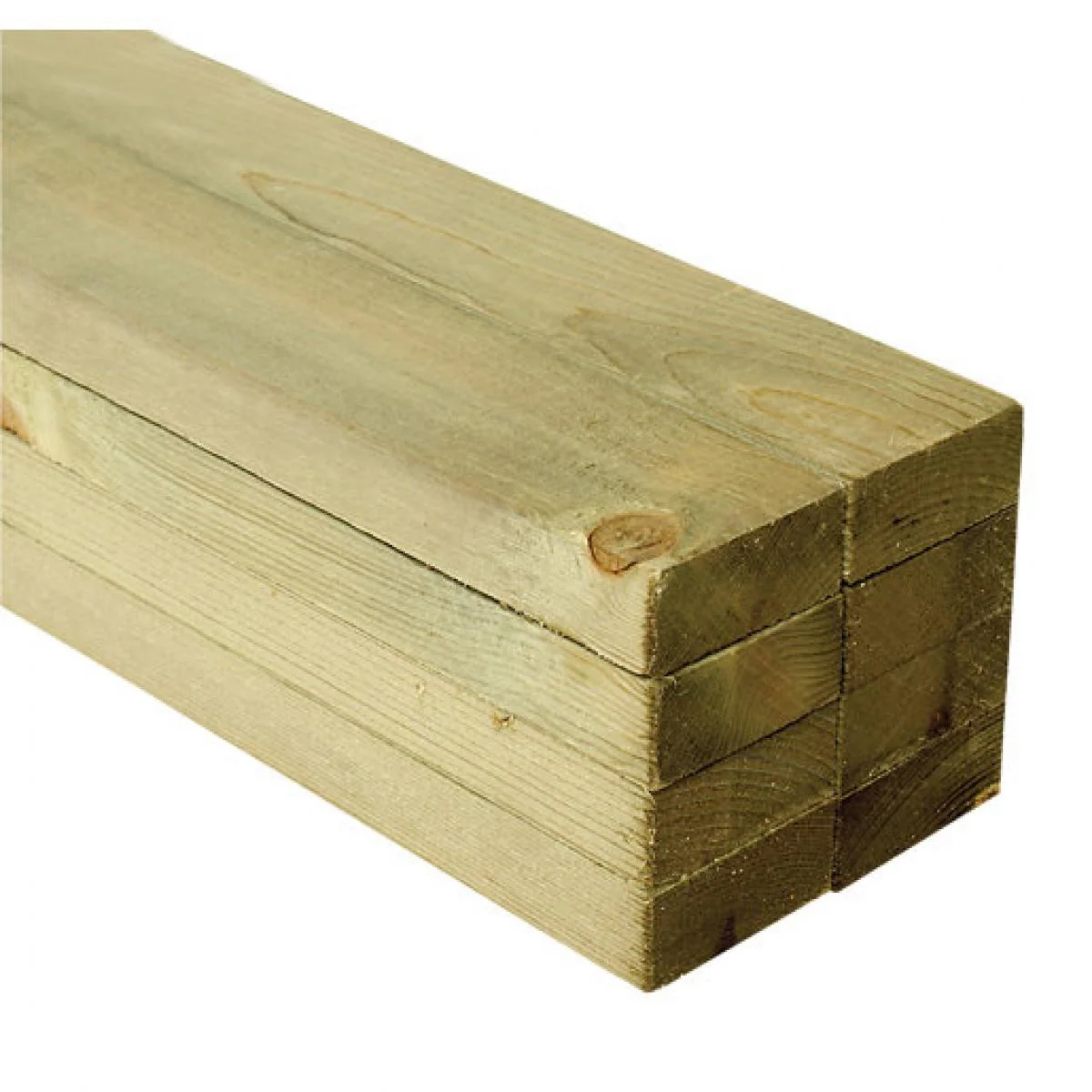
Pressure treated fencing arris rails are the structural backbone of traditional feather edge fencing. This 75mm x 75mm x 2.4m rail slots between fence posts to give feather edge boards a firm nailing surface, keeping each bay rigid and correctly aligned for the life of the fence.
Specifications
| Property | Detail |
|---|---|
| Material | Softwood timber |
| Treatment | Pressure treated with preservative to resist rot and insect attack |
| Finish | Rough sawn |
| Nominal Size | 75mm x 75mm |
| Length | 2.4m |
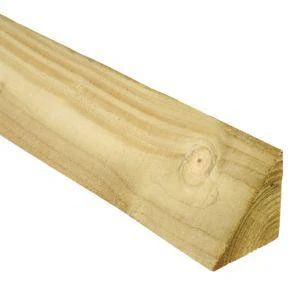
| Profile | Triangular (arris) |
| Use Class | UC3 (above ground, exterior) |
What it's used for
- Providing horizontal support rails for feather edge close-board fencing panels between timber fence posts
- Standard bay construction for 1.8m and 1.8m-plus high close-board fencing where four rails per bay give adequate board support
- Replacement of split or rotten arris rails in existing fence runs without replacing the posts
- New-build garden boundary and perimeter fencing on domestic and commercial sites across the UK
Fitting and handling
Fix the arris rail with its flat face turned towards the feather edge boards and the two angled faces pointing outward, which encourages rainwater to run clear rather than sit on the timber. Arris rail brackets are the standard fixing method, slotting into the post mortise and gripping the rail firmly at each end without the need for notching the post. Pressure treated timber may arrive with surface moisture from the treatment process, so store rails off the ground on level bearers under cover for 48 hours before fixing to allow any excess moisture to disperse.
FAQ
How many arris rails do I need per bay of feather edge fencing?
For a standard 1.8m high close-board fence, three rails per bay is common, but four rails per bay is recommended for better board support and long-term rigidity, particularly in exposed locations. Space them evenly between the post tops and ground level, keeping the lowest rail well clear of soil contact.
Can I cut pressure treated arris rail to a shorter length on site?
Yes. Arris rail cuts cleanly with a hand saw or circular saw. Where you cut through the treated outer layer, apply a liberal coat of end-grain preservative or fence treatment to the cut face before fitting, as the pressure treatment does not fully penetrate to the core of the timber.
What is the difference between an arris rail and a square fence rail?
An arris rail has a triangular cross-section, which sheds water from its exposed upper faces and reduces the surface area that can hold moisture and dirt. A square rail has a flat top face that can pool water over time. For close-board feather edge fencing, the arris profile is the traditional and most widely used choice.
Browse the full range of feather edge boards at Nottage Timber Merchants to put together everything you need for a complete fencing run. We supply trade and retail customers across Bridgend and South Wales, with next-day delivery available to many local postcodes.
Description
Pressure treated fencing arris rails are the structural backbone of traditional feather edge fencing. This 75mm x 75mm x 2.4m rail slots between fence posts to give feather edge boards a firm nailing surface, keeping each bay rigid and correctly aligned for the life of the fence.
Specifications
| Property | Detail |
|---|---|
| Material | Softwood timber |
| Treatment | Pressure treated with preservative to resist rot and insect attack |
| Finish | Rough sawn |
| Nominal Size | 75mm x 75mm |
| Length | 2.4m |
| Profile | Triangular (arris) |
| Use Class | UC3 (above ground, exterior) |
What it's used for
- Providing horizontal support rails for feather edge close-board fencing panels between timber fence posts
- Standard bay construction for 1.8m and 1.8m-plus high close-board fencing where four rails per bay give adequate board support
- Replacement of split or rotten arris rails in existing fence runs without replacing the posts
- New-build garden boundary and perimeter fencing on domestic and commercial sites across the UK
Fitting and handling
Fix the arris rail with its flat face turned towards the feather edge boards and the two angled faces pointing outward, which encourages rainwater to run clear rather than sit on the timber. Arris rail brackets are the standard fixing method, slotting into the post mortise and gripping the rail firmly at each end without the need for notching the post. Pressure treated timber may arrive with surface moisture from the treatment process, so store rails off the ground on level bearers under cover for 48 hours before fixing to allow any excess moisture to disperse.
FAQ
How many arris rails do I need per bay of feather edge fencing?
For a standard 1.8m high close-board fence, three rails per bay is common, but four rails per bay is recommended for better board support and long-term rigidity, particularly in exposed locations. Space them evenly between the post tops and ground level, keeping the lowest rail well clear of soil contact.
Can I cut pressure treated arris rail to a shorter length on site?
Yes. Arris rail cuts cleanly with a hand saw or circular saw. Where you cut through the treated outer layer, apply a liberal coat of end-grain preservative or fence treatment to the cut face before fitting, as the pressure treatment does not fully penetrate to the core of the timber.
What is the difference between an arris rail and a square fence rail?
An arris rail has a triangular cross-section, which sheds water from its exposed upper faces and reduces the surface area that can hold moisture and dirt. A square rail has a flat top face that can pool water over time. For close-board feather edge fencing, the arris profile is the traditional and most widely used choice.
Browse the full range of feather edge boards at Nottage Timber Merchants to put together everything you need for a complete fencing run. We supply trade and retail customers across Bridgend and South Wales, with next-day delivery available to many local postcodes.