Original: $11.52
-65%$11.52
$4.03The Story
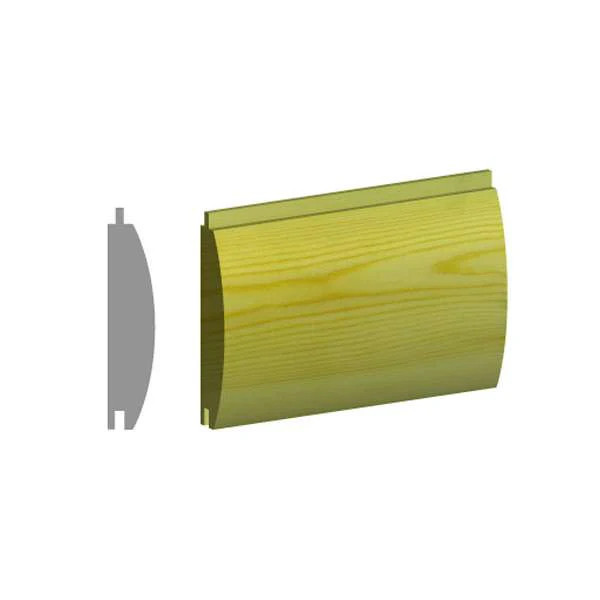
Treated Redwood Loglap Cladding in 22mm x 125mm gives garden buildings a traditional log cabin appearance. Machined from Scandinavian redwood and pressure treated for outdoor use, it suits summerhouses, garden offices, sheds, and outbuildings. Finished size is approximately 18mm x 120mm with an effective cover of 108mm.
Specifications
| Property | Detail |
|---|---|
| Material | Scandinavian Redwood (Pinus sylvestris) |
| Treatment | Pressure treated |
| Profile | Loglap (tongue and groove) |
| Nominal Size | 22mm x 125mm |
| Finished Size | Approx. 18mm x 120mm |
| Effective Cover | Approx. 108mm |
| Lengths Available | 4.2m, 4.5m, 4.8m, 5.1m |
| Use Class | UC3 (above ground, outdoor exposed) |
What it's used for
- Cladding the exterior walls of summerhouses and garden rooms
- Garden offices and home studio outbuildings where a log cabin profile is required
- Sheds, storage buildings, and other timber outbuildings
- New-build log cabin kits or replacement cladding on existing structures
Fitting and handling
Store the boards flat, off the ground and under cover for at least 48 hours before fixing to allow them to acclimatise to site conditions, particularly in cold or damp weather. Fix through the tongue at each support using stainless steel or hot-dip galvanised ring-shank nails or screws to resist corrosion and hold the boards securely as the timber moves with seasonal moisture changes. Once fitted, apply a good-quality exterior timber stain or preservative paint to all exposed faces and end cuts, or leave uncoated to weather gradually to a natural silver-grey.
FAQ
What is the difference between loglap and shiplap cladding?
Loglap boards have a rounded, convex face that gives the appearance of stacked logs, which is typical of traditional Scandinavian cabin construction. Shiplap boards have a flat face with a rebated overlap. Both use a tongue and groove joint, but loglap gives a more rustic, three-dimensional finish.
Does the pressure treatment mean I don't need to apply a finish?
The pressure treatment protects the timber against rot and fungal decay, but it does not seal the surface against moisture absorption or UV fading. Applying an exterior stain or preservative finish will extend the service life further and keep the boards looking their best for longer.
How many boards do I need to clad a garden building?
Work out the total surface area of your walls in square metres, then divide by the effective cover of 0.108m per board to find the number of linear metres required. Add 10 to 15 per cent for waste, end cuts, and any damaged boards. Our team at Nottage Timber Merchants are happy to help you calculate quantities before you order.
For more outdoor timber cladding options, browse the full cladding and fencing range at Nottage Timber Merchants. We supply from our yard in Bridgend, South Wales, with next-day delivery available across the South Wales area.
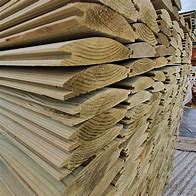
Details & Craftsmanship
Every detail has been carefully considered to bring you the perfect product.
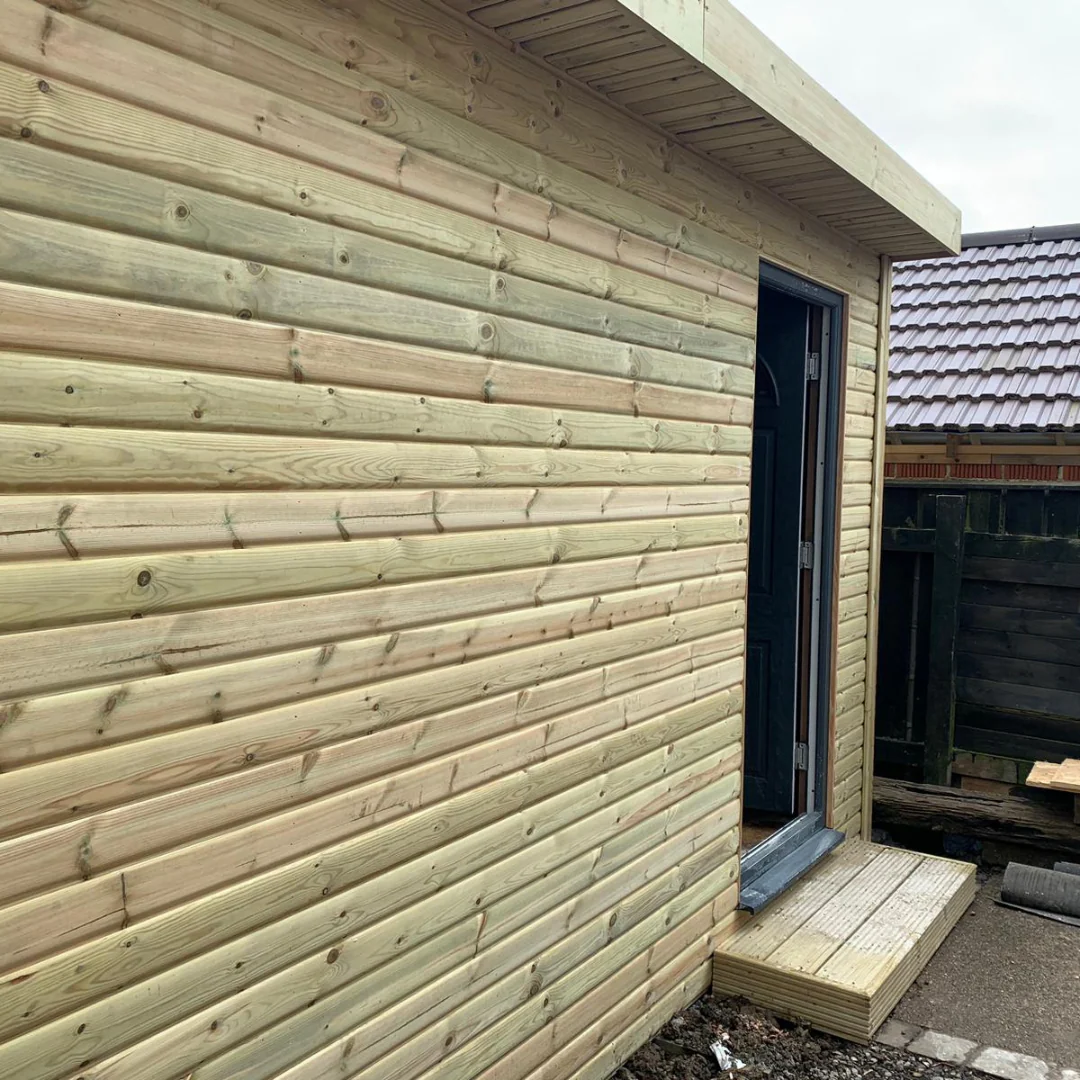
Details & Craftsmanship
Every detail has been carefully considered to bring you the perfect product.
Description
Treated Redwood Loglap Cladding in 22mm x 125mm gives garden buildings a traditional log cabin appearance. Machined from Scandinavian redwood and pressure treated for outdoor use, it suits summerhouses, garden offices, sheds, and outbuildings. Finished size is approximately 18mm x 120mm with an effective cover of 108mm.
Specifications
| Property | Detail |
|---|---|
| Material | Scandinavian Redwood (Pinus sylvestris) |
| Treatment | Pressure treated |
| Profile | Loglap (tongue and groove) |
| Nominal Size | 22mm x 125mm |
| Finished Size | Approx. 18mm x 120mm |
| Effective Cover | Approx. 108mm |
| Lengths Available | 4.2m, 4.5m, 4.8m, 5.1m |
| Use Class | UC3 (above ground, outdoor exposed) |
What it's used for
- Cladding the exterior walls of summerhouses and garden rooms
- Garden offices and home studio outbuildings where a log cabin profile is required
- Sheds, storage buildings, and other timber outbuildings
- New-build log cabin kits or replacement cladding on existing structures
Fitting and handling
Store the boards flat, off the ground and under cover for at least 48 hours before fixing to allow them to acclimatise to site conditions, particularly in cold or damp weather. Fix through the tongue at each support using stainless steel or hot-dip galvanised ring-shank nails or screws to resist corrosion and hold the boards securely as the timber moves with seasonal moisture changes. Once fitted, apply a good-quality exterior timber stain or preservative paint to all exposed faces and end cuts, or leave uncoated to weather gradually to a natural silver-grey.
FAQ
What is the difference between loglap and shiplap cladding?
Loglap boards have a rounded, convex face that gives the appearance of stacked logs, which is typical of traditional Scandinavian cabin construction. Shiplap boards have a flat face with a rebated overlap. Both use a tongue and groove joint, but loglap gives a more rustic, three-dimensional finish.
Does the pressure treatment mean I don't need to apply a finish?
The pressure treatment protects the timber against rot and fungal decay, but it does not seal the surface against moisture absorption or UV fading. Applying an exterior stain or preservative finish will extend the service life further and keep the boards looking their best for longer.
How many boards do I need to clad a garden building?
Work out the total surface area of your walls in square metres, then divide by the effective cover of 0.108m per board to find the number of linear metres required. Add 10 to 15 per cent for waste, end cuts, and any damaged boards. Our team at Nottage Timber Merchants are happy to help you calculate quantities before you order.
For more outdoor timber cladding options, browse the full cladding and fencing range at Nottage Timber Merchants. We supply from our yard in Bridgend, South Wales, with next-day delivery available across the South Wales area.