The Story
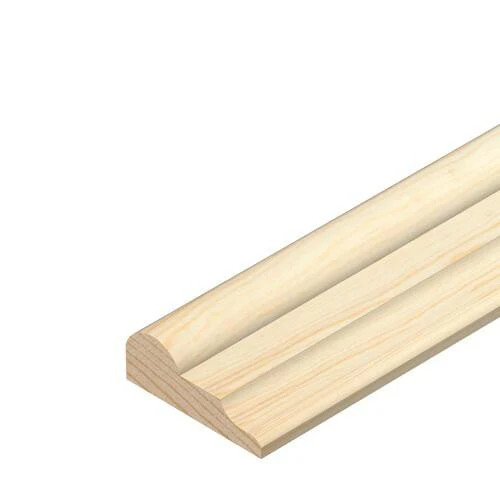
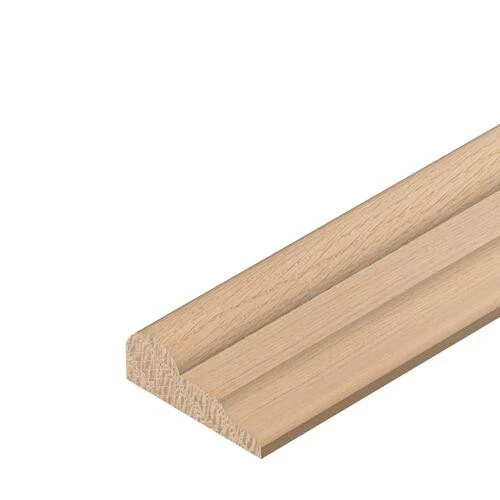
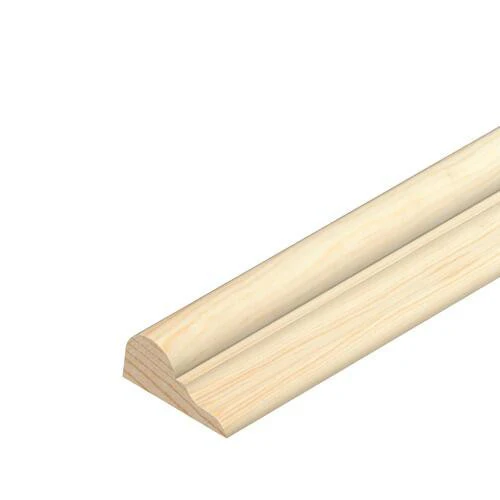
Pine broken ogee decorative moulding in a 15mm x 8mm x 2400mm length offers a classic curved profile for finishing interior walls, ceilings, furniture and cabinetry. Made from straight-grained softwood pine, it is lightweight, easy to work with and suits both period and contemporary rooms.
Specifications
| Property | Detail |
|---|---|
| Material | Softwood pine |
| Profile | Broken ogee |
| Nominal Size | 15mm x 8mm |
| Length | 2400mm |
| Finish | Planed / ready to decorate |
What it's used for
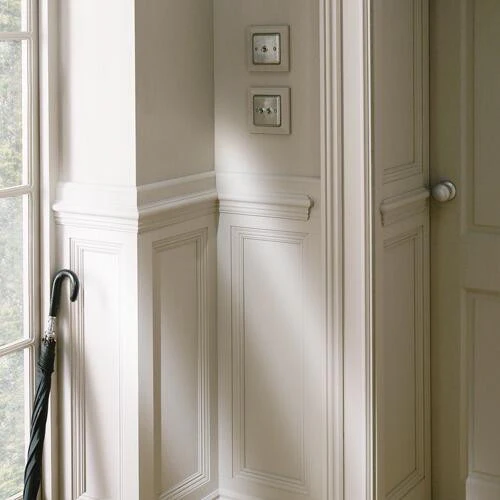
- Framing wall panels and dado rails to add definition in living rooms, hallways and bedrooms
- Finishing the junction between skirting boards or architraves and the wall for a neat, traditional appearance
- Detailing cabinet doors, drawer fronts and furniture edges where a subtle decorative profile is required
- Applying as a small cornice or shadow line moulding at ceiling junctions in period-style interiors
Fitting and handling
Allow the moulding to acclimatise in the room where it will be fitted for at least 48 hours before fixing, particularly in heated or humid spaces such as kitchens and bathrooms. At this small section size, the moulding can be fixed using a suitable panel adhesive, fine pins or a combination of both; pre-drill near any ends to avoid splitting. Once in place, fill any pin holes, sand lightly and finish with a wood primer followed by the paint or stain of your choice.
FAQ
What is a broken ogee moulding profile?
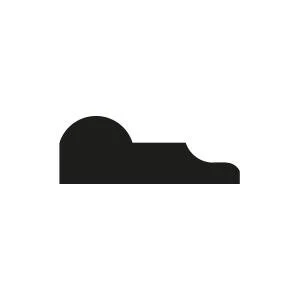
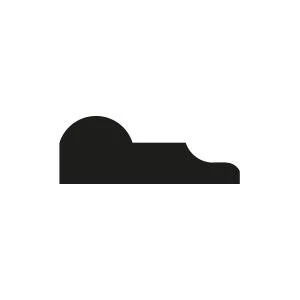
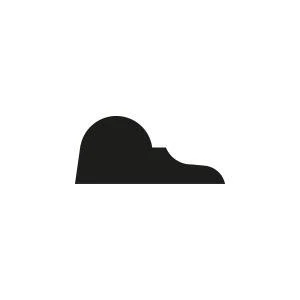
A broken ogee is a traditional woodworking profile that combines a concave and convex curve, creating an S-shaped cross section. The term "broken" refers to a flat step or quirk that interrupts the curve, giving the profile a crisper, more defined look compared to a plain ogee.
Can I paint or stain this pine moulding?
Yes. Pine takes both paint and stain well. For a painted finish, apply a wood primer first to seal the grain and prevent resin bleed, then follow with your chosen topcoat. For a stained or natural finish, a sanding sealer before the stain will help achieve an even colour across the grain.
What is the best way to join lengths of this moulding at corners?
For internal corners, a scribed or coped joint gives a tighter, more durable result than a mitre, which can open up as timber moves with humidity. For external corners and straight butt joints along a run, a 45-degree mitre cut works well. A fine-toothed mitre saw or a mitre box will give clean, accurate cuts on a section this size.
Browse the full range of pine mouldings at Nottage Timber Merchants, including ogee, ovolo, hockey stick and cover profiles. We supply trade and retail customers across South Wales, with next-day delivery available to Bridgend and surrounding areas.
Details & Craftsmanship
Every detail has been carefully considered to bring you the perfect product.
Details & Craftsmanship
Every detail has been carefully considered to bring you the perfect product.
Description
Pine broken ogee decorative moulding in a 15mm x 8mm x 2400mm length offers a classic curved profile for finishing interior walls, ceilings, furniture and cabinetry. Made from straight-grained softwood pine, it is lightweight, easy to work with and suits both period and contemporary rooms.
Specifications
| Property | Detail |
|---|---|
| Material | Softwood pine |
| Profile | Broken ogee |
| Nominal Size | 15mm x 8mm |
| Length | 2400mm |
| Finish | Planed / ready to decorate |
What it's used for
- Framing wall panels and dado rails to add definition in living rooms, hallways and bedrooms
- Finishing the junction between skirting boards or architraves and the wall for a neat, traditional appearance
- Detailing cabinet doors, drawer fronts and furniture edges where a subtle decorative profile is required
- Applying as a small cornice or shadow line moulding at ceiling junctions in period-style interiors
Fitting and handling
Allow the moulding to acclimatise in the room where it will be fitted for at least 48 hours before fixing, particularly in heated or humid spaces such as kitchens and bathrooms. At this small section size, the moulding can be fixed using a suitable panel adhesive, fine pins or a combination of both; pre-drill near any ends to avoid splitting. Once in place, fill any pin holes, sand lightly and finish with a wood primer followed by the paint or stain of your choice.
FAQ
What is a broken ogee moulding profile?
A broken ogee is a traditional woodworking profile that combines a concave and convex curve, creating an S-shaped cross section. The term "broken" refers to a flat step or quirk that interrupts the curve, giving the profile a crisper, more defined look compared to a plain ogee.
Can I paint or stain this pine moulding?
Yes. Pine takes both paint and stain well. For a painted finish, apply a wood primer first to seal the grain and prevent resin bleed, then follow with your chosen topcoat. For a stained or natural finish, a sanding sealer before the stain will help achieve an even colour across the grain.
What is the best way to join lengths of this moulding at corners?
For internal corners, a scribed or coped joint gives a tighter, more durable result than a mitre, which can open up as timber moves with humidity. For external corners and straight butt joints along a run, a 45-degree mitre cut works well. A fine-toothed mitre saw or a mitre box will give clean, accurate cuts on a section this size.
Browse the full range of pine mouldings at Nottage Timber Merchants, including ogee, ovolo, hockey stick and cover profiles. We supply trade and retail customers across South Wales, with next-day delivery available to Bridgend and surrounding areas.